<?xml version="1.0" encoding="utf-8"?>
<feed xmlns="http://www.w3.org/2005/Atom" xmlns:media="http://search.yahoo.com/mrss/">
    <title>SingaporeIQ</title>
    <link href="https://singaporeiq.com/feed.xml" rel="self" />
    <link href="https://singaporeiq.com" />
    <updated>2026-11-08T11:00:43+01:00</updated>
    <author>
        <name>Alexander Ressos</name>
    </author>
    <id>https://singaporeiq.com</id>

    <entry>
        <title>Data Privacy</title>
        <author>
            <name>Alexander Ressos</name>
        </author>
        <link href="https://singaporeiq.com/data-privacy/"/>
        <id>https://singaporeiq.com/data-privacy/</id>

        <updated>2026-11-08T11:00:43+01:00</updated>
            <summary type="html">
                <![CDATA[
                    This statement explains which personal data is processed when you visit singaporeiq.com or one of its language versions, why it&hellip;
                ]]>
            </summary>
        <content type="html">
            <![CDATA[
                <p>This statement explains which personal data is processed when you visit singaporeiq.com or one of its language versions, why it is processed and what rights you have. In short: the website uses no analytics, no tracking and no advertising cookies. Personal data reaches us only when you contact us.</p>
<h2>1. Organisation responsible</h2>
<p>IBF Singapore Pte. Ltd.<br>PS100, 100 Peck Seah Street, #07-14<br>Singapore 079333<br>UEN 201208436D<br>E-mail: <a href="mailto:alexander.ressos@kgplegal.com.sg">alexander.ressos@kgplegal.com.sg</a></p>
<p>Questions about data protection, requests and complaints go to this address. It is also the business contact of our data protection officer under the Personal Data Protection Act 2012 (PDPA).</p>
<h2>2. Applicable law</h2>
<p>We process personal data in accordance with the PDPA. Where they apply to visitors from the European Union, the European Economic Area or Switzerland, we also observe the General Data Protection Regulation (GDPR) and the Swiss Federal Act on Data Protection (FADP).</p>
<h2>3. Visiting the website</h2>
<p>When you open a page, your browser sends technical data to the server: IP address, date and time, the page requested, the referring page, and browser and operating system. The hosting provider processes this data in server log files to deliver the pages and to keep the website secure. The log files are not combined with other data. They are deleted after a short period, unless an attack has to be investigated. Under the GDPR the legal basis is our legitimate interest in a secure and working website (Art. 6(1)(f) GDPR).</p>
<h2>4. No analytics, no tracking</h2>
<p>The website uses no web analytics, no tracking pixels, no advertising networks and no social media plug-ins. It sets no cookies for analytics or marketing. The fonts are stored on our own server, so no data goes to font providers when a page loads.</p>
<h2>5. Videos</h2>
<p>Some pages show videos through the embedded player of an EU-based video hosting service (euvideocdn.com). When such a page loads, your browser connects to that service. It receives your IP address and the technical data needed to stream the video.</p>
<h2>6. Contact form and e-mail</h2>
<p>If you write to us through the contact form, we receive your name, your e-mail address, any further details you choose to give and your message. The form is transmitted by the service submit-form.com, which forwards the message to us by e-mail and stores it for that purpose. If you write an e-mail, we receive your address and the content of your message.</p>
<p>We use these data only to answer your enquiry and, if an engagement follows, to prepare it. If your enquiry concerns Singapore law, we pass it to KGP Legal LLC, which provides all advice on Singapore law. By sending your message you consent to this use under the PDPA. Under the GDPR the legal basis is your consent and the steps taken at your request before a contract (Art. 6(1)(a) and (b) GDPR).</p>
<p>Messages are kept as long as needed to deal with your enquiry and then deleted, unless statutory retention duties require longer storage, for instance after an engagement.</p>
<h2>7. Disclosure and transfer abroad</h2>
<p>We do not sell personal data and do not pass it on for advertising. Data is disclosed only to the service providers named above and, where your enquiry requires it, to KGP Legal LLC. Some providers process data outside Singapore, for instance in the European Union, Switzerland or the United States. Where data leaves Singapore, we take steps to ensure that it receives protection comparable to the PDPA, in particular through contractual safeguards.</p>
<h2>8. Your rights</h2>
<p>You may ask for access to the personal data we hold about you and for information on how it has been used. You may ask us to correct it. You may withdraw your consent at any time with effect for the future. Where the GDPR or the FADP applies, you also have the right to erasure, to restriction of processing, to data portability and to object to processing based on legitimate interests.</p>
<p>Send your request to <a href="mailto:alexander.ressos@kgplegal.com.sg">alexander.ressos@kgplegal.com.sg</a>. You may also complain to a supervisory authority: in Singapore the Personal Data Protection Commission (PDPC), in Switzerland the Federal Data Protection and Information Commissioner (FDPIC), in the EU the authority of your country of residence.</p>
<h2>9. Security</h2>
<p>The website is delivered over an encrypted connection (HTTPS). We protect the data we receive with reasonable technical and organisational measures. E-mail sent over the internet may not be fully secure. Please send no confidential information before we have agreed how to communicate.</p>
<h2>10. Changes</h2>
<p>We may update this statement when the website or the law changes. The version published on this page applies.</p>
<p>See also the <a href="https://singaporeiq.com/imprint/">Imprint</a> and the <a href="https://singaporeiq.com/legal-terms/">Legal Terms</a>.</p>
<p><em>Last updated: 8 November 2026</em></p>
            ]]>
        </content>
    </entry>
    <entry>
        <title>Imprint</title>
        <author>
            <name>Alexander Ressos</name>
        </author>
        <link href="https://singaporeiq.com/imprint/"/>
        <id>https://singaporeiq.com/imprint/</id>

        <updated>2026-11-08T11:00:43+01:00</updated>
            <summary type="html">
                <![CDATA[
                    Website operator IBF Singapore Pte. Ltd. PS100, 100 Peck Seah Street, #07-14 Singapore 079333 Republic of Singapore Unique Entity Number&hellip;
                ]]>
            </summary>
        <content type="html">
            <![CDATA[
                <h2>Website operator</h2>
<p>IBF Singapore Pte. Ltd.<br>PS100, 100 Peck Seah Street, #07-14<br>Singapore 079333<br>Republic of Singapore</p>
<p>Unique Entity Number (UEN): 201208436D<br>Registered with the Accounting and Corporate Regulatory Authority (ACRA), Singapore<br>Private company limited by shares</p>
<h2>Contact</h2>
<p>E-mail: <a href="mailto:alexander.ressos@kgplegal.com.sg">alexander.ressos@kgplegal.com.sg</a><br>Website: <a href="https://singaporeiq.com">singaporeiq.com</a></p>
<h2>Publisher and editorial responsibility</h2>
<p>The content of SingaporeIQ is published by Dr Alexander Ressos, who is responsible for its editorial content. The page <a href="https://singaporeiq.com/about-this-portal/">About this portal</a> describes the publisher, the books on which the site is based and its sources.</p>
<h2>Singapore law advice</h2>
<p>Dr Alexander Ressos is Of Counsel at KGP Legal LLC. All advice on Singapore law is provided through KGP Legal LLC, an established and duly licensed firm of Singapore advocates and solicitors. SingaporeIQ itself gives no legal advice.</p>
<h2>Language versions</h2>
<p>SingaporeIQ appears in several languages. This Imprint, the <a href="https://singaporeiq.com/legal-terms/">Legal Terms</a> and the <a href="https://singaporeiq.com/data-privacy/">Data Privacy</a> statement apply to all language versions. They are published in English only.</p>
<h2>Images</h2>
<p>Photographs: Adobe Stock, used under licence. Book covers: Editions Euthenia.</p>
<p><em>Last updated: 8 November 2026</em></p>
            ]]>
        </content>
    </entry>
    <entry>
        <title>Legal Terms</title>
        <author>
            <name>Alexander Ressos</name>
        </author>
        <link href="https://singaporeiq.com/legal-terms/"/>
        <id>https://singaporeiq.com/legal-terms/</id>

        <updated>2026-11-08T11:00:43+01:00</updated>
            <summary type="html">
                <![CDATA[
                    These Legal Terms govern your use of singaporeiq.com and of all its language versions (together, the “website”). The website is&hellip;
                ]]>
            </summary>
        <content type="html">
            <![CDATA[
                <p>These Legal Terms govern your use of singaporeiq.com and of all its language versions (together, the “website”). The website is operated by IBF Singapore Pte. Ltd., PS100, 100 Peck Seah Street, #07-14, Singapore 079333 (UEN 201208436D). By using the website you accept these terms.</p>
<h2>1. Information only</h2>
<p>The website explains the law, the markets and the institutions of Singapore in general terms. Its articles, guides and book chapters are written for information. They are not legal, tax, investment or other professional advice and should not be relied on as such. Your situation may differ from the cases described, and the law changes. Before you act, take advice on your specific facts.</p>
<h2>2. No client relationship</h2>
<p>Reading the website, sending a message through the contact form or writing an e-mail creates no client relationship. A client relationship arises only when a written engagement has been agreed. Advice on Singapore law is given only by KGP Legal LLC, a duly licensed firm of Singapore advocates and solicitors. Please send no confidential information before an engagement is in place.</p>
<h2>3. Accuracy and currency</h2>
<p>The content is prepared with care and reflects the state of the law at the date of writing. It may be incomplete. Later changes in legislation, regulation or case law may not yet be reflected. Statements about the law of Switzerland, Hong Kong or other jurisdictions are made for comparison.</p>
<h2>4. Translations</h2>
<p>The language versions of the website are translations of the English original. Where a translation differs from the English text, the English text prevails.</p>
<h2>5. Copyright</h2>
<p>Texts, books, graphics and the design of the website are protected by copyright. The rights belong to Dr Alexander Ressos and to the respective authors and licensors. You may read, print and save individual pages for your own use. Any other reproduction, distribution or commercial use needs prior written consent. Short quotations with a clear reference to the source are permitted within the limits of the law.</p>
<h2>6. Links to other websites</h2>
<p>The website links to official sources and to other websites. Their operators are responsible for their content. Links were checked when they were set. A link does not mean that the content of the linked page is adopted.</p>
<h2>7. Liability</h2>
<p>To the extent permitted by law, IBF Singapore Pte. Ltd. and the publisher exclude liability for loss or damage arising from the use of the website or from reliance on its content. Liability that cannot be excluded by law, in particular for intent and gross negligence, remains unaffected. The website may at times be unavailable. There is no right to uninterrupted access.</p>
<h2>8. Data protection</h2>
<p>The <a href="https://singaporeiq.com/data-privacy/">Data Privacy</a> statement describes how personal data is handled.</p>
<h2>9. Changes</h2>
<p>These terms may be updated. The version published on this page applies.</p>
<h2>10. Governing law and jurisdiction</h2>
<p>These terms and any dispute arising from the use of the website are governed by the law of the Republic of Singapore. The courts of Singapore have exclusive jurisdiction, unless mandatory law gives consumers the right to sue in the courts of their home country.</p>
<h2>Contact</h2>
<p>IBF Singapore Pte. Ltd., PS100, 100 Peck Seah Street, #07-14, Singapore 079333, e-mail <a href="mailto:alexander.ressos@kgplegal.com.sg">alexander.ressos@kgplegal.com.sg</a>. See also the <a href="https://singaporeiq.com/imprint/">Imprint</a>.</p>
<p><em>Last updated: 8 November 2026</em></p>
            ]]>
        </content>
    </entry>
    <entry>
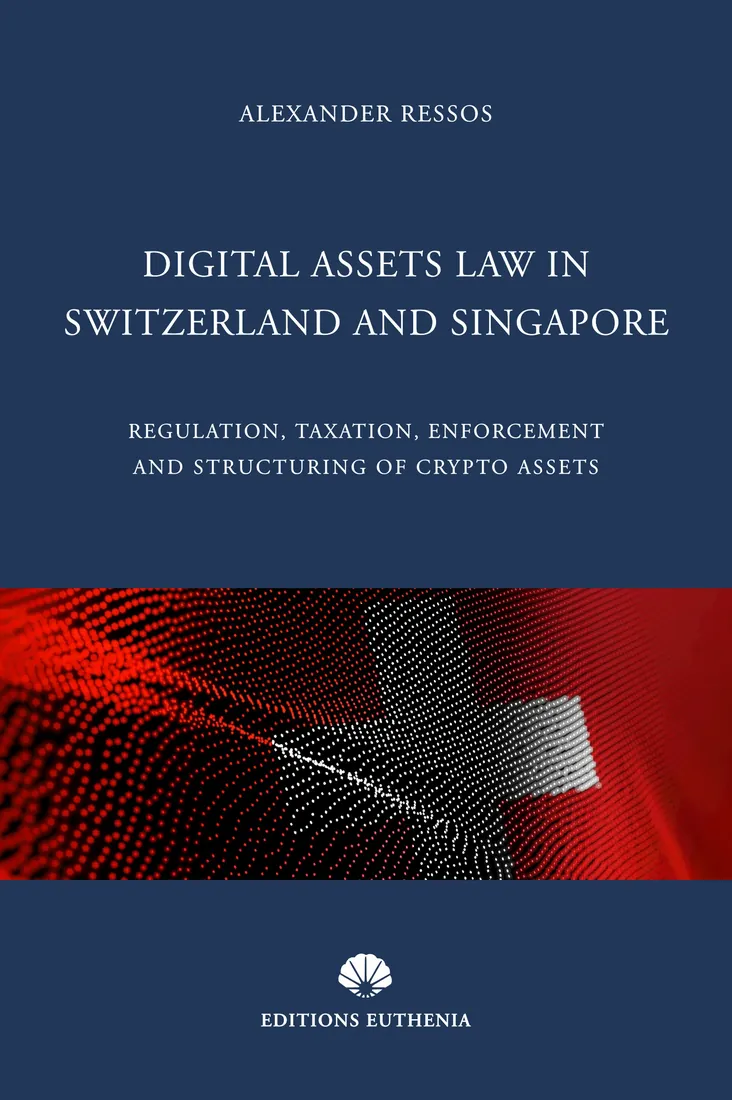
        <title>Digital Assets Law in Singapore and Switzerland</title>
        <author>
            <name>Alexander Ressos</name>
        </author>
        <link href="https://singaporeiq.com/digital-assets-law-singapore-and-switzerland/"/>
        <id>https://singaporeiq.com/digital-assets-law-singapore-and-switzerland/</id>
        <media:content url="https://singaporeiq.com/media/posts/6214/buchcover-digital-assets-singapore.webp" medium="image" />
            <category term="Books and Practitioner Handbooks"/>

        <updated>2026-11-04T13:21:32+01:00</updated>
            <summary type="html">
                <![CDATA[
                        <img src="https://singaporeiq.com/media/posts/6214/buchcover-digital-assets-singapore.webp" alt="Digital Assets Law in Singapore and Switzerland – cover" />
                    The law of digital assets in Singapore, read against Switzerland: the MAS approach, property and trusts, the Payment Services Act&hellip;
                ]]>
            </summary>
        <content type="html">
            <![CDATA[
                    <p><img src="https://singaporeiq.com/media/posts/6214/buchcover-digital-assets-singapore.webp" class="type:primaryImage" alt="Digital Assets Law in Singapore and Switzerland – cover" /></p>
                <p><strong>The law of digital assets in Singapore, read against Switzerland: the MAS approach, property and trusts, the Payment Services Act and the Securities and Futures Act, AML and sanctions, tax, enforcement, structuring and a practical toolkit. Law stated as at 30 June 2026.</strong></p>

<h2>What the book covers</h2>
<p>Two small countries have become places where serious digital-asset businesses choose to live. Each has a legal order that was ready for the asset class early, a regulator that talks to applicants, a tax system that rewards patient holding and courts that have already decided what a token is. The book explains how those orders work, where they resemble each other and where they diverge. It helps a founder, an investor, a trustee or a fellow adviser to use both without falling between them.</p>
<p>This site publishes the parts that concern Singapore and the comparison. The Swiss parts of the printed book are not reproduced here. Later changes are outside the book: the licensing exemption and fund incentive conditions for family offices of mid-2026 and the draft stablecoin legislation of September 2026, for example, are noted on <a href="https://singaporeiq.com/doing-business-in-singapore/">Doing Business in Singapore</a>.</p>

<h2>Contents published here</h2>
<ul>
<li><a href="https://singaporeiq.com/tags/digital-assets-the-two-hubs-why-switzerland-and-singapore/">The Two Hubs: Why Switzerland and Singapore</a></li>
<li><a href="https://singaporeiq.com/tags/digital-assets-technology-and-taxonomy-for-lawyers/">Technology and Taxonomy for Lawyers</a></li>
<li><a href="https://singaporeiq.com/tags/digital-assets-singapore-i-foundations-and-the-mas-approach/">Singapore I: Foundations and the MAS Approach</a></li>
<li><a href="https://singaporeiq.com/tags/digital-assets-singapore-ii-private-law-and-case-law/">Singapore II: Private Law and Case Law</a></li>
<li><a href="https://singaporeiq.com/tags/digital-assets-singapore-iii-regulation-psa-sfa-fsma-dtsp-stablecoins-tokenisation/">Singapore III: Regulation: PSA, SFA, FSMA/DTSP, Stablecoins, Tokenisation</a></li>
<li><a href="https://singaporeiq.com/tags/digital-assets-singapore-iv-aml-cft-and-compliance/">Singapore IV: AML/CFT and Compliance</a></li>
<li><a href="https://singaporeiq.com/tags/digital-assets-singapore-v-taxation-and-incentives/">Singapore V: Taxation and Incentives</a></li>
<li><a href="https://singaporeiq.com/tags/digital-assets-singapore-vi-enforcement-insolvency-and-dispute-resolution/">Singapore VI: Enforcement, Insolvency and Dispute Resolution</a></li>
<li><a href="https://singaporeiq.com/tags/digital-assets-comparative-analysis-and-the-wider-context/">Comparative Analysis and the Wider Context</a></li>
<li><a href="https://singaporeiq.com/tags/digital-assets-structuring-between-the-hubs/">Structuring Between the Hubs</a></li>
<li><a href="https://singaporeiq.com/tags/digital-assets-practice-toolkit/">Practice Toolkit</a>: decision guides, checklists, model clauses and roadmaps</li>
<li><a href="https://singaporeiq.com/tags/digital-assets-annexes-chronology-legislation-cases-and-guidance/">Annexes: Chronology, Legislation, Cases and Guidance</a></li>
</ul>

<h2>Read it here</h2>
<p>The text is on SingaporeIQ section by section, free of charge: <a href="https://singaporeiq.com/tags/digital-assets-law-singapore-book/">Digital Assets Law in Singapore and Switzerland – all sections</a>. Start with <a href="https://singaporeiq.com/da-the-two-hubs-why-switzerland-and-singapore/">the opening of the book</a> or <a href="https://singaporeiq.com/da-the-state-of-the-law-on-30-june-2026/">the state of the law on 30 June 2026</a>.</p>

<h2>Bibliographic details</h2>
<ul>
<li>Dr Alexander Ressos TEP, <em>Digital Assets Law in Singapore and Switzerland</em></li>
<li>Editions Euthenia, law as at 30 June 2026</li>
</ul>

<h2>The author</h2>
<p>SingaporeIQ is published by Dr Alexander Ressos. Dr Ressos is Of Counsel with KGP Legal LLC. All Singapore law advice is provided through KGP Legal LLC, a duly licensed firm of Singapore advocates and solicitors (licence LSRA/LLC/2017/00023), 10 Anson Road #03-27 International Plaza, Singapore 079903. All enquiries should be directed to Dr Alexander Ressos at <a href="mailto:alexander.ressos@kgplegal.com.sg">alexander.ressos@kgplegal.com.sg</a>.</p>
<p>Dr Ressos has been working in Singapore and Hong Kong since 2009. <a href="https://singaporeiq.com/dr-alexander-ressos/">His profile</a> lists his admissions. The book is a study of the law. SingaporeIQ is an information website. It gives no legal advice, and reading it creates no client relationship.</p>
            ]]>
        </content>
    </entry>
    <entry>
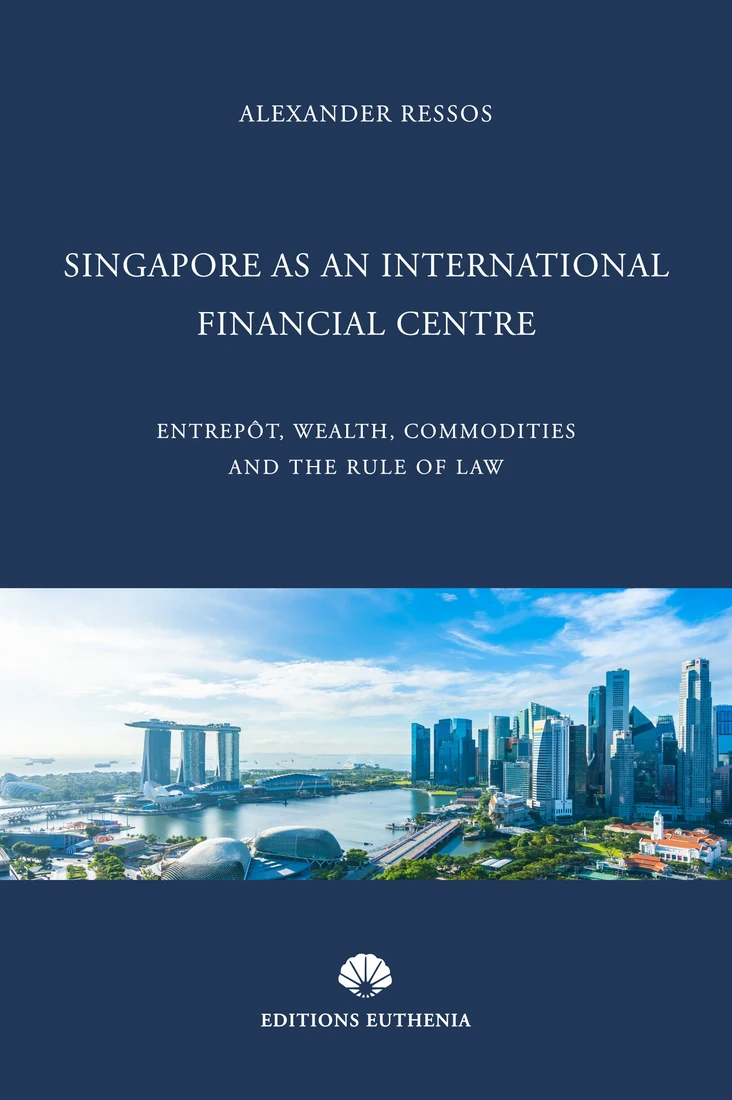
        <title>Singapore as an International Financial Centre</title>
        <author>
            <name>Alexander Ressos</name>
        </author>
        <link href="https://singaporeiq.com/singapore-as-an-international-financial-centre/"/>
        <id>https://singaporeiq.com/singapore-as-an-international-financial-centre/</id>
        <media:content url="https://singaporeiq.com/media/posts/6215/buchcover-singapore-financial-centre.webp" medium="image" />
            <category term="Books and Practitioner Handbooks"/>

        <updated>2026-11-04T13:21:32+01:00</updated>
            <summary type="html">
                <![CDATA[
                        <img src="https://singaporeiq.com/media/posts/6215/buchcover-singapore-financial-centre.webp" alt="Singapore as an International Financial Centre – cover" />
                    Entrepôt, Wealth, Commodities and the Rule of Law. How a small settlement at the southern tip of the Malay Peninsula&hellip;
                ]]>
            </summary>
        <content type="html">
            <![CDATA[
                    <p><img src="https://singaporeiq.com/media/posts/6215/buchcover-singapore-financial-centre.webp" class="type:primaryImage" alt="Singapore as an International Financial Centre – cover" /></p>
                <p><strong>Entrepôt, Wealth, Commodities and the Rule of Law. How a small settlement at the southern tip of the Malay Peninsula became a free port, an imperial entrepôt, an independent city-state and a financial centre: a study that combines the historian's, the lawyer's and the practitioner's view, published here in full, section by section.</strong></p>

<h2>What the book covers</h2>
<p>The book is the companion volume to <em>Genève, place financière internationale</em> and follows its architecture. It reads Singapore through the free port of 1819, whose openness to every flag became the founding principle of the city, and through the wealth, the commodities and the rule of law that grew around it. Each stage left its mark on the institutions, habits and networks that clients, banks, traders and lawyers meet today.</p>
<p>The chapters explain the treaties of 1824 and the reception of English law, the agency houses and the credit chains between Europe, India, China and the archipelago, the clan associations and the idea of reputation as collateral, and the courts, ordinances and company law of the Crown Colony. If you want to understand why Singapore's institutions look the way they do, this is where to start.</p>

<h2>Contents</h2>
<ul>
<li>Part A: <a href="https://singaporeiq.com/tags/singapore-origins-from-temasek-to-the-free-port/">Origins: From Temasek to the Free Port</a></li>
<li>Part B: <a href="https://singaporeiq.com/tags/singapore-colony-and-commerce-18671942/">Colony and Commerce (1867–1942)</a></li>
<li>Part C: <a href="https://singaporeiq.com/tags/singapore-war-independence-and-the-developmental-state-19421971/">War, Independence and the Developmental State (1942–1971)</a></li>
<li>Part D: <a href="https://singaporeiq.com/tags/singapore-building-a-global-financial-centre-19712008/">Building a Global Financial Centre (1971–2008)</a></li>
<li>Part E: <a href="https://singaporeiq.com/tags/singapore-contemporary-wealth-management-and-private-banking/">Contemporary Wealth Management and Private Banking</a></li>
<li>Part F: <a href="https://singaporeiq.com/tags/singapore-international-singapore-law-disputes-and-diplomacy/">International Singapore: Law, Disputes and Diplomacy</a></li>
<li>Part G: <a href="https://singaporeiq.com/tags/singapore-the-commodity-trading-hub/">The Commodity Trading Hub</a></li>
<li>Part H: <a href="https://singaporeiq.com/tags/singapore-trade-finance-fraud-and-risk/">Trade Finance, Fraud and Risk</a></li>
<li>Part I: <a href="https://singaporeiq.com/tags/singapore-gateway-to-asia/">Gateway to Asia</a></li>
<li>Part J: <a href="https://singaporeiq.com/tags/singapore-language-as-infrastructure-english-and-bilingualism/">Language as Infrastructure: English and Bilingualism</a></li>
<li>Part K: <a href="https://singaporeiq.com/tags/singapore-singapore-2035/">Singapore 2035</a></li>
<li><a href="https://singaporeiq.com/tags/singapore-financial-centre-annexes/">Annexes: Chronology, Glossary and Statistics</a></li>
</ul>

<h2>Read it here</h2>
<p>The published text is on SingaporeIQ section by section, free of charge: <a href="https://singaporeiq.com/tags/singapore-financial-centre-book/">Singapore as an International Financial Centre – all sections</a>. Start with <a href="https://singaporeiq.com/sg-preface-singapore-as-an-international-financial-centre/">the preface</a>.</p>

<h2>Bibliographic details</h2>
<ul>
<li>Dr Alexander Ressos TEP, <em>Singapore as an International Financial Centre: Entrepôt, Wealth, Commodities and the Rule of Law</em></li>
<li>Editions Euthenia</li>
</ul>

<h2>The author</h2>
<p>SingaporeIQ is published by Dr Alexander Ressos. Dr Ressos is Of Counsel with KGP Legal LLC. All Singapore law advice is provided through KGP Legal LLC, a duly licensed firm of Singapore advocates and solicitors (licence LSRA/LLC/2017/00023), 10 Anson Road #03-27 International Plaza, Singapore 079903. All enquiries should be directed to Dr Alexander Ressos at <a href="mailto:alexander.ressos@kgplegal.com.sg">alexander.ressos@kgplegal.com.sg</a>.</p>
<p>Dr Ressos has been working in Singapore and Hong Kong since 2009. <a href="https://singaporeiq.com/dr-alexander-ressos/">His profile</a> lists his admissions. SingaporeIQ is an information website. It gives no legal advice, and reading it creates no client relationship.</p>
            ]]>
        </content>
    </entry>
    <entry>
        <title>Singapore as an International Financial Centre — preface</title>
        <author>
            <name>Alexander Ressos</name>
        </author>
        <link href="https://singaporeiq.com/sg-preface-singapore-as-an-international-financial-centre/"/>
        <id>https://singaporeiq.com/sg-preface-singapore-as-an-international-financial-centre/</id>
            <category term="Singapore as an International Financial Centre"/>
            <category term="Singapore"/>

        <updated>2026-10-31T12:00:00+01:00</updated>
            <summary type="html">
                <![CDATA[
                    Few places show as clearly as Singapore that a financial centre can be built by design. In a little over&hellip;
                ]]>
            </summary>
        <content type="html">
            <![CDATA[
                <p class="vorspann">Few places show as clearly as Singapore that a financial centre can be built by design. In a little over two centuries a small settlement at the southern tip of the Malay Peninsula became a free port, an imperial entrepôt, an independent city-state and one of the leading financial centres of the world. Each stage left its mark on the institutions, habits and networks that clients, banks, traders and lawyers encounter today.</p>
<p>This book is the companion volume to <em>Genève, place financière internationale</em> and follows its architecture. It reads Singapore through five pillars. The first is the entrepôt: the free port of 1819, which made openness to every flag the founding principle of the city. The second is wealth: from the exchange banks and Chinese banks of the colonial era to the private banks, family offices and fund managers of the present. The third is commodities: tin and rubber in the nineteenth century, oil, bunkering, liquefied natural gas and agricultural trading today. The fourth is the gateway: Singapore as the point of entry to Southeast Asia, China and India, a role that corresponds to Geneva's ties with Africa. The fifth is language: English as the working language of law and finance, combined with a bilingual policy that turned Mandarin into a commercial asset.</p>
<p>The formative force in Singapore was the state, much as the Reformation was in Geneva. The Economic Development Board, the Monetary Authority of Singapore, the Central Provident Fund, Temasek and GIC are the instruments of a developmental strategy that treated the financial centre as a national project. The book gives this strategy its own part, because it explains both the speed of Singapore's rise and the particular form its regulation takes.</p>
<p>The book combines three perspectives. The historian's, because a financial centre is a sediment of earlier decisions. The lawyer's, because the trust a financial centre sells takes the form of rules, procedures and courts. And the practitioner's, because those rules are read in files: the opening of a banking relationship, the verification of the source of funds, the screening of a counterparty against sanctions lists, the structuring of a family's wealth and the financing of a cargo.</p>
<p>I write from a legal practice spanning several jurisdictions: Switzerland, where I am entered in the cantonal register of lawyers of Zurich, England and Wales, Hong Kong and Germany. I spent fifteen years in Singapore and Hong Kong. In Singapore I worked for a Swiss law firm and served as external compliance officer to a fund management company regulated by the Monetary Authority of Singapore. Today I remain Of Counsel to a Singapore law practice. That experience explains two choices. The first is comparison: Singapore is best understood when set beside Geneva, Zurich, Hong Kong, Dubai and London. The second is connection: wealth management, commodity trading, compliance and economic criminal law form a single field of risk and opportunity in the reality of cross-border mandates.</p>
<p>The book follows a chronological and thematic order. Parts A to D trace the formation of the centre, from the port of Temasek and the free port of 1819 through the colonial economy and the Second World War to independence and the building of a global financial centre up to 2008. Part E is devoted to contemporary wealth management, its regulatory framework, the end of banking secrecy for foreign tax purposes and the rise of family offices. Part F describes international Singapore: the rule of law, arbitration, the Singapore International Commercial Court and the diplomacy of a small state. Parts G and H address commodity trading, its financing and the risks that accompany it. Part I examines Singapore as the gateway to Asia, Part J the role of language, and Part K the outlook for the centre to 2035. Annexes provide a chronology, a trilingual glossary and a statistical overview.</p>
<p>Each chapter can be read on its own. Each ends with a summary in five sentences and, where the subject lends itself to it, a checklist for practitioners. Boxes highlight the essentials, common misconceptions and worked figures.</p>
<p>Data are drawn first from official sources and industry bodies, in particular the Monetary Authority of Singapore, the Department of Statistics, the Economic Development Board, Enterprise Singapore and the Singapore Exchange. Where sources diverge, the gap is set out and discussed. Law and data are stated as at September 2026. Nothing in this book constitutes legal, tax or financial advice, since every situation calls for its own examination.</p>
            ]]>
        </content>
    </entry>
    <entry>
        <title>A Place on the Strait: Temasek, Singapura and the Maritime Trade of the Malay World</title>
        <author>
            <name>Alexander Ressos</name>
        </author>
        <link href="https://singaporeiq.com/sg-a-place-on-the-strait-temasek-singapura-and-the-maritime-trade-of-the-malay-world/"/>
        <id>https://singaporeiq.com/sg-a-place-on-the-strait-temasek-singapura-and-the-maritime-trade-of-the-malay-world/</id>
            <category term="Singapore: Origins: From Temasek to the Free Port"/>
            <category term="Singapore as an International Financial Centre"/>
            <category term="Singapore"/>

        <updated>2026-10-31T11:50:00+01:00</updated>
            <summary type="html">
                <![CDATA[
                    Every financial centre begins with a place. Before Singapore had banks, a stock exchange or a monetary authority, it had&hellip;
                ]]>
            </summary>
        <content type="html">
            <![CDATA[
                <p class="vorspann">Every financial centre begins with a place. Before Singapore had banks, a stock exchange or a monetary authority, it had a position: an island at the point where the Strait of Malacca turns into the South China Sea, on the route that every ship sailing between the Indian Ocean and China had to take. This chapter examines that position and the commercial history it produced long before the East India Company arrived. It asks what kind of port stood on the island in the fourteenth century, why it rose and why it fell, and what the rival ports of the Strait – Srivijaya, Malacca, Johor and Riau – reveal about the conditions under which a place of exchange flourishes.</p>
<p>The question is more than antiquarian. The founding narrative of modern Singapore long began in 1819, as if the island had been an empty stage on which Stamford Raffles set up a free port. Archaeology and a closer reading of the written sources have replaced that narrative with a longer one. Singapore was a port of regional importance in the fourteenth century. Eclipsed for four centuries by rivals, it was refounded when the balance of power in the Strait changed once more. The pattern of rise, eclipse and refounding recurs throughout this book. It shows that geography offers an opportunity and that institutions decide whether the opportunity is taken.</p>
<p>The chapter also serves the comparative purpose of this volume. The Geneva volume opens with the medieval fairs of Geneva and their loss to Lyon, a reminder that a favourable location is exposed to the decisions of powerful neighbours.<sup class="fn"><a href="#fn1" id="fnref1">1</a></sup> The history of the Strait tells the same story on a maritime scale. Competing for the same ships, the same merchants and the same protection, the ports of the Strait rose or fell with the policies of the powers that stood behind them.</p>
<div class="hauptkasten">
<h3>Essentials</h3>
<p>Singapore’s site controls the southern exit of the Strait of Malacca, the shortest sea route between the Indian Ocean and the South China Sea. A trading settlement existed on the island in the fourteenth century and is documented by Chinese and Javanese texts, by the Malay Annals and by extensive archaeological finds. The settlement declined around 1400 and its trade passed to Malacca, then to Johor and Riau. When the British founded their settlement in 1819, they were reviving a port whose earlier history taught lessons – protection, predictable rules and openness to many communities – that shaped the new foundation.</p>
</div>
<h2 class="fussnoten-titel">Notes</h2><ol class="fussnoten">
<li id="fn1">Ressos, <em>Genève, place financière internationale</em>, Frankfurt am Main, Editions Euthenia, 2026, partie A. <a href="#fnref1" class="fn-zurueck" aria-label="Back to text">&#8617;</a></li>
</ol>
            ]]>
        </content>
    </entry>
    <entry>
        <title>The Strait of Malacca as a corridor of trade</title>
        <author>
            <name>Alexander Ressos</name>
        </author>
        <link href="https://singaporeiq.com/sg-the-strait-of-malacca-as-a-corridor-of-trade/"/>
        <id>https://singaporeiq.com/sg-the-strait-of-malacca-as-a-corridor-of-trade/</id>
            <category term="Singapore: Origins: From Temasek to the Free Port"/>
            <category term="Singapore as an International Financial Centre"/>
            <category term="Singapore"/>

        <updated>2026-10-31T11:40:00+01:00</updated>
            <summary type="html">
                <![CDATA[
                    The monsoon system and the rhythm of trade The Strait of Malacca owes its importance to the winds. In the&hellip;
                ]]>
            </summary>
        <content type="html">
            <![CDATA[
                <h3>The monsoon system and the rhythm of trade</h3>
<p class="vorspann">The Strait of Malacca owes its importance to the winds. In the age of sail, shipping between the Indian Ocean and the South China Sea was governed by the monsoons: the north-east monsoon, which blows roughly from November to March, and the south-west monsoon, which blows roughly from May to September.<sup class="fn"><a href="#fn1" id="fnref1">1</a></sup> A ship from India or the Persian Gulf could not complete the voyage to China on a single monsoon. It sailed east with the south-west monsoon, waited in a port of the Strait for the wind to change and continued with the next season. Alternatively, it exchanged its cargo in the Strait with merchants coming from the east.</p>
<p>The consequence was structural. The Strait became a place of waiting, which created a market. Merchants from the west and merchants from the east met in its ports, exchanged goods, settled accounts and extended credit to one another for the next voyage. A port in the Strait did not need to produce anything of value. It needed to offer a safe anchorage, water and provisions, warehouses, a market with reliable rules and a ruler who protected the ships in his harbour and taxed them with restraint. The ports of the Strait were, in this sense, service economies from the beginning. They sold security, information and the opportunity to trade.</p>
<p>The rhythm of the monsoons also explains the concentration of trade. Because every ship needed a port at the right point on the route, the ports competed for a limited number of positions. A ruler who could attract the monsoon traffic gained customs revenue, prestige and the resources to maintain a fleet. A port that lost the traffic declined quickly. The history of the Strait is therefore a history of succession: one dominant port after another, each replacing its predecessor when it offered better protection or better terms.</p>
<h3>The narrow gate: the Singapore Strait</h3>
<p>At its southern end, the Strait of Malacca narrows into the Singapore Strait, a channel between the island of Singapore and the Riau archipelago. At its narrowest point, in the Phillips Channel, the passage is only about 1.7 miles wide.<sup class="fn"><a href="#fn2" id="fnref2">2</a></sup> Every ship sailing between the Indian Ocean and the South China Sea by the Strait passes within sight of the island. The same geography that made the Strait a corridor made the island a gate.</p>
<p>The significance of this position has survived every change of technology. The sailing ships of the fourteenth century, the steamships of the nineteenth and the tankers of the twenty-first century all pass through the same narrow water. The US Energy Information Administration reported that petroleum and other liquids transiting the Strait of Malacca reached 16 million barrels per day in 2016.<sup class="fn"><a href="#fn3" id="fnref3">3</a></sup> The figure belongs to Part G of this book, which examines Singapore as a centre of the oil trade and of bunkering. It is recorded here because it shows the continuity of the underlying fact: the island stands at one of the principal chokepoints of world trade.</p>
<p>A gate, however, is also a place of danger. Because narrow waters with many islands and inlets offered ideal conditions for piracy, the ports of the Strait were never far from the raiders who preyed on passing ships. Whether a port on the Singapore Strait served as a market or as a base for raiders depended on the political order around it. The Chinese traveller Wang Dayuan, discussed below, recorded both faces of the island in the fourteenth century: an orderly trading community on the hill and a channel where pirates lay in wait.</p>
<h3>Srivijaya and the first maritime state of the Strait</h3>
<p>The first great power of the Strait was Srivijaya, a maritime kingdom centred on Palembang in southern Sumatra. The Chinese Buddhist monk Yijing visited Srivijaya for six months in 671 on his way to India. The earliest inscription naming Srivijaya, the Kedukan Bukit inscription, is dated 16 June 682.<sup class="fn"><a href="#fn4" id="fnref4">4</a></sup> Between the late seventh and the early eleventh centuries, Srivijaya controlled the two passages between India and China: the Sunda Strait and the Strait of Malacca.<sup class="fn"><a href="#fn5" id="fnref5">5</a></sup></p>
<p>Srivijaya was a new kind of state. Its power rested on the control of sea lanes and on relationships with the peoples of the coasts and the sea, among them the sea-nomadic communities known in later sources as orang laut, who crewed its fleets and policed its waters. Its wealth came from the transit trade and from the privileged relationship with China. Srivijaya maintained lucrative trade relations with the Chinese court from the Tang to the Song dynasty.<sup class="fn"><a href="#fn6" id="fnref6">6</a></sup> Its rulers sent tribute missions to the Chinese court, which recognised them as the legitimate intermediaries of the southern trade. Access to the Chinese market was the most valuable privilege a port of the Strait could hold.</p>
<p>Srivijaya’s decline illustrates the vulnerability of such a system. In 1025, the Chola ruler Rajendra I of southern India launched naval raids on the ports of Srivijaya, after which no Srivijayan envoys reached China between 1028 and 1077.<sup class="fn"><a href="#fn7" id="fnref7">7</a></sup> The raids did not end maritime trade in the Strait. They broke the monopoly of a single port and opened the way for a multiplicity of smaller ports, each seeking its own share of the traffic. The settlement on the island of Singapore, which appears in the sources in the thirteenth and fourteenth centuries, belongs to this post-Srivijayan world.</p>
<h3>The Chinese market and the tribute system</h3>
<p>The demand that drove the trade of the Strait came, above all, from China. Chinese markets absorbed the spices, aromatic woods, resins, tin, ivory and exotic products of Southeast Asia and the Indian Ocean, while Chinese ceramics, silks and copper coins flowed in the other direction. Under the Song and Yuan dynasties, private Chinese merchants, many of them from the port of Quanzhou in Fujian, traded directly in the ports of the Nanyang, the “Southern Ocean”.<sup class="fn"><a href="#fn8" id="fnref8">8</a></sup></p>
<p>The political framework of this trade was the tribute system. Rulers of Southeast Asian ports sent envoys with gifts to the Chinese emperor, acknowledged his superiority and received in return recognition, gifts of greater value and, in periods when private trade was restricted, the right to trade. Recognition by the Chinese court conferred legitimacy and protection. It also connected the port to the largest market of the age. The pattern survived into the fifteenth century, when the founders of Malacca used Ming recognition to secure their new port against their neighbours.</p>
<p>For a financial centre, the lesson is familiar. The value of a port depended on its access to the largest market, an access that rested on political recognition by the power that controlled the market. The relationship between Singapore and China, examined in Part I of this book, has deep roots in this pattern.</p>
<h2 class="fussnoten-titel">Notes</h2><ol class="fussnoten">
<li id="fn1">On the monsoon system and its effect on the rhythm of trade in the Strait, see Anthony Reid, <em>Southeast Asia in the Age of Commerce 1450–1680</em>, vol. 1, New Haven, Yale University Press, 1988, chapter 1; the months given are approximate and vary with the source. <a href="#fnref1" class="fn-zurueck" aria-label="Back to text">&#8617;</a></li>
<li id="fn2">US Energy Information Administration, “The Strait of Malacca, a key oil trade chokepoint, links the Indian and Pacific Oceans”, <em>Today in Energy</em>, 11 August 2017 (“At its narrowest point in the Phillips Channel of the Singapore Strait, the Strait of Malacca is only about 1.7 miles wide”). <a href="#fnref2" class="fn-zurueck" aria-label="Back to text">&#8617;</a></li>
<li id="fn3">US Energy Information Administration, <em>Today in Energy</em>, 11 August 2017 (“Petroleum and other liquids transiting the Strait of Malacca … reaching 16 million barrels per day”). <a href="#fnref3" class="fn-zurueck" aria-label="Back to text">&#8617;</a></li>
<li id="fn4">Wikipedia, “Srivijaya” (accessed September 2026), citing Yijing’s account of his stay in 671 and the Kedukan Bukit inscription dated 16 June 682. <a href="#fnref4" class="fn-zurueck" aria-label="Back to text">&#8617;</a></li>
<li id="fn5">Wikipedia, “Srivijaya” (accessed September 2026): the kingdom “controlled the two passages between India and China, namely the Sunda Strait from Palembang and the Malacca Strait from Kedah”. <a href="#fnref5" class="fn-zurueck" aria-label="Back to text">&#8617;</a></li>
<li id="fn6">Wikipedia, “Srivijaya” (accessed September 2026): “their main foreign interest was nurturing lucrative trade agreements with China which lasted from the Tang to the Song dynasty”. <a href="#fnref6" class="fn-zurueck" aria-label="Back to text">&#8617;</a></li>
<li id="fn7">Wikipedia, “Srivijaya” (accessed September 2026), on the Chola raids of 1025 and the absence of Srivijayan missions to China between 1028 and 1077. <a href="#fnref7" class="fn-zurueck" aria-label="Back to text">&#8617;</a></li>
<li id="fn8">On Quanzhou as the principal port of the Song and Yuan maritime trade and on private Chinese trade in the Nanyang, see Derek Heng, <em>Sino-Malay Trade and Diplomacy from the Tenth through the Fourteenth Century</em>, Athens (Ohio), Ohio University Press, 2009. <a href="#fnref8" class="fn-zurueck" aria-label="Back to text">&#8617;</a></li>
</ol>
            ]]>
        </content>
    </entry>
    <entry>
        <title>Temasek and Singapura in the fourteenth century: archaeology and chronicle</title>
        <author>
            <name>Alexander Ressos</name>
        </author>
        <link href="https://singaporeiq.com/sg-temasek-and-singapura-in-the-fourteenth-century-archaeology-and-chronicle/"/>
        <id>https://singaporeiq.com/sg-temasek-and-singapura-in-the-fourteenth-century-archaeology-and-chronicle/</id>
            <category term="Singapore: Origins: From Temasek to the Free Port"/>
            <category term="Singapore as an International Financial Centre"/>
            <category term="Singapore"/>

        <updated>2026-10-31T11:30:00+01:00</updated>
            <summary type="html">
                <![CDATA[
                    The written sources: Chinese, Javanese and Malay The history of the island before 1819 rests on three kinds of written&hellip;
                ]]>
            </summary>
        <content type="html">
            <![CDATA[
                <h3>The written sources: Chinese, Javanese and Malay</h3>
<p class="vorspann">The history of the island before 1819 rests on three kinds of written evidence: Chinese travel and geographical literature, Javanese court poetry and the Malay historical tradition. Since each has its own perspective and its own limitations, the modern understanding of fourteenth-century Singapore depends on reading them together and checking them against the archaeological record.</p>
<p>The most important Chinese source is the <em>Daoyi Zhilüe</em> (“Brief Account of the Island Barbarians”) of Wang Dayuan, a merchant-traveller who sailed through the Nanyang around 1330 and completed his account in the middle of the fourteenth century.<sup class="fn"><a href="#fn1" id="fnref1">1</a></sup> Wang described a place he called Danmaxi, a Chinese rendering of Temasek, and distinguished two areas within it. The first, Longyamen, the “Dragon’s Teeth Gate”, was a strait between two hills through which ships passed. The second, Banzu, was a settlement on a hill inhabited by traders.<sup class="fn"><a href="#fn2" id="fnref2">2</a></sup></p>
<p>Wang’s account contrasts the two areas sharply. Of Longyamen he warned that ships returning from the Western Oceans might be met by pirates attacking with two to three hundred boats. Of Banzu he wrote that its inhabitants were honest traders, who wore their hair short with turbans of gold-brocaded satin and red clothing.<sup class="fn"><a href="#fn3" id="fnref3">3</a></sup> Banzu is generally identified with the area of Fort Canning Hill, and Longyamen with the western entrance to the harbour, near today’s Keppel Harbour.<sup class="fn"><a href="#fn4" id="fnref4">4</a></sup> Wang also recorded that local products included lakawood and tin, and that the inhabitants traded with Chinese merchants from Quanzhou.<sup class="fn"><a href="#fn5" id="fnref5">5</a></sup></p>
<p>Wang’s text contains a further detail of political importance. He reported that Temasek had been attacked by the Siamese and that the city had resisted the siege for a month.<sup class="fn"><a href="#fn6" id="fnref6">6</a></sup> The episode shows that the settlement was of sufficient value to attract the attention of a mainland power and strong enough to defend itself. It also shows the precariousness of its position between larger neighbours.</p>
<p>The Javanese source is the <em>Nagarakretagama</em>, a court poem composed in 1365 in praise of the kingdom of Majapahit in eastern Java. It lists Tumasik among the territories that the poet regarded as vassals of Majapahit.<sup class="fn"><a href="#fn7" id="fnref7">7</a></sup> Court poetry records claims. The list therefore reflects Majapahit’s ambitions more than its effective control. It confirms, however, that the settlement was known by name in the capital of the most powerful state of the archipelago and was considered worth claiming.</p>
<p>The third source is the Malay historical tradition, above all the <em>Sejarah Melayu</em>, the “Malay Annals”, a court chronicle of the Malacca dynasty composed in the fifteenth and sixteenth centuries and revised in the early seventeenth century.<sup class="fn"><a href="#fn8" id="fnref8">8</a></sup> The Annals tell the story of Singapura as the first seat of the dynasty that later ruled Malacca. Written to legitimise the rulers of Malacca and Johor, they are a dynastic chronicle with an uncertain chronology. Their account of Singapura nonetheless agrees in its outlines with the Chinese and archaeological evidence.</p>
<h3>The Malay Annals and the founding legend</h3>
<p>According to the <em>Sejarah Melayu</em>, a prince from Palembang named Sang Nila Utama, who claimed descent from Alexander the Great, landed on the island of Temasek, saw a strange and powerful animal and was told that it was a lion. He took the sighting as an auspicious sign, founded a city on the island and named it Singapura, the “Lion City”.<sup class="fn"><a href="#fn9" id="fnref9">9</a></sup> Five rulers are said to have reigned in Singapura before the city fell. A later tradition dates the foundation to around 1299, a date that has become part of the official narrative of Singapore’s long history.<sup class="fn"><a href="#fn10" id="fnref10">10</a></sup></p>
<p>The legend expresses several claims at once. The descent from Palembang connects Singapura with the prestige of Srivijaya. The descent from Alexander connects the dynasty with the wider Islamic world, in which the chronicle was written. The lion, an animal that never lived on the island, turns an ordinary settlement into a place chosen by providence. For the historian of the financial centre, the most interesting feature of the legend is its insistence on legitimacy. A port in the Strait needed a ruler whose authority was recognised by merchants and neighbours alike. The founding legend served as an instrument of that recognition.</p>
<p>The Annals also contain episodes that reflect the dangers facing the city. They tell of an attack by swordfish that was repelled by a boy’s idea of building a barrier of banana stems, and of the strongman Badang, whose feats of strength were remembered in connection with a great stone at the mouth of the river.<sup class="fn"><a href="#fn11" id="fnref11">11</a></sup> Historians read the swordfish episode as an allegory of a seaborne attack. Whatever its origin, it confirms a theme that runs through the sources: the city’s prosperity was constantly threatened from the sea.</p>
<h3>Archaeology: the evidence from the ground</h3>
<p>For a long time the fourteenth-century city was known only from these texts, which left many historians doubting whether a settlement of any importance had existed. Archaeology changed that assessment. Early finds came by chance. In 1819, labourers clearing the jungle at the mouth of the Singapore River found a large sandstone boulder bearing an inscription of about fifty lines. The Singapore Stone rose to about 3 metres in height and 3 metres in width. In 1843 it was blown up on the orders of the acting Settlement Engineer to clear and widen the passage at the mouth of the river.<sup class="fn"><a href="#fn12" id="fnref12">12</a></sup> Of the fragments that were saved, some went to Calcutta and one is exhibited in Singapore today. The inscription has never been deciphered, although the Dutch scholar Hendrik Kern suggested a date around 1230.<sup class="fn"><a href="#fn13" id="fnref13">13</a></sup></p>
<p>In 1928, workers on Fort Canning Hill found several pieces of gold ornaments dating to the mid-fourteenth century.<sup class="fn"><a href="#fn14" id="fnref14">14</a></sup> The ornaments, in a style associated with eastern Java, pointed to a wealthy elite with links to Majapahit. They confirmed that the hill, called Bukit Larangan, the “Forbidden Hill”, by the Malays of 1819, had once been the site of a court.</p>
<p>Systematic excavation began in 1984. The American archaeologist John Miksic conducted his first excavation at Fort Canning from 18 to 28 January 1984 and recovered 1,346 pottery sherds, weighing 14.31 kg, dating from the fourteenth century.<sup class="fn"><a href="#fn15" id="fnref15">15</a></sup> Further excavations followed at the Parliament House complex in 1994, at Empress Place in 1998, and at the Padang of the Singapore Cricket Club and the grounds of St Andrew’s Cathedral in 2003.<sup class="fn"><a href="#fn16" id="fnref16">16</a></sup> The combined results show that fourteenth-century Temasek is the best archaeologically documented port settlement in the Straits of Melaka.<sup class="fn"><a href="#fn17" id="fnref17">17</a></sup></p>
<p>The finds allow a picture of the settlement to be drawn. There was a court on the hill, with workshops, and a commercial district along the north bank of the river, where goods were landed, stored and processed. Chinese ceramics dominate the finds: stoneware storage jars, porcelain of the Yuan period, including blue-and-white and celadon wares, and everyday pottery. Coins, glass, beads and metalwork testify to trade with China, India and the archipelago. Evidence of metalworking suggests that the settlement also processed raw materials.<sup class="fn"><a href="#fn18" id="fnref18">18</a></sup></p>
<p>For the purposes of this book, three conclusions matter. First, Temasek was a real port with a real market, connected to the major trading networks of its time. Second, its prosperity rested on the transit and re-export trade, the same function that the British settlement would perform after 1819. Third, its trade was oriented towards China, whose goods and probably whose merchants were present in the settlement. The fourteenth-century port was an entrepôt. The modern city, which describes itself with the same word, therefore has a longer genealogy than the story of 1819 suggests.</p>
<div class="hauptkasten">
<h3>Common misconception</h3>
<p>It is often said that Singapore was a sleepy fishing village when Raffles arrived and that its history began in 1819. The first half of the statement describes the island in 1819 with some accuracy: the settlement of the Temenggong numbered about 150 people, most of them Malays, with around 30 Chinese, within a total population of around a thousand on the island, most of them members of local sea peoples.<sup class="fn"><a href="#fn19" id="fnref19">19</a></sup> The second half is incorrect. The island had been a port of regional importance five centuries earlier, as the British founders knew: Raffles was aware of the Malay tradition of Singapura and chose the site partly for its historical associations.</p>
</div>
<h3>A port between Siam and Majapahit</h3>
<p>The fourteenth-century port lived between two larger powers. To the north, the Thai kingdoms, which extended their influence down the Malay Peninsula, claimed overlordship over the ports of the peninsula. To the south-east, Majapahit claimed the ports of the archipelago. Temasek resisted a Siamese siege, as Wang Dayuan recorded, and appears as a vassal in Majapahit’s court poetry. Its rulers probably maintained relations with both powers and with China, seeking the recognition that secured their trade without surrendering the autonomy that made it profitable.</p>
<p>This position between powers is a recurring feature of Singapore’s history. The modern republic has pursued a foreign policy of balancing between larger states and of cultivating relations with all of them, a policy examined in Part F of this book. It would be anachronistic to attribute a foreign policy in the modern sense to the rulers of Temasek. The structural situation, however, was comparable: a small port with valuable trade, dependent on the tolerance of its neighbours and on its usefulness to all of them.</p>
<h3>The fall of Singapura</h3>
<p>The end of the fourteenth-century city is recorded differently in the different traditions. The <em>Sejarah Melayu</em> tells of a ruler who executed a woman of the court on a false accusation, and of her father, a high official, who in revenge opened the gates of the city to an invading Javanese fleet. The Portuguese sources of the sixteenth century, including the account of Tomé Pires, tell of a prince from Palembang, Parameswara, who took refuge in Singapura, killed its local ruler and governed the island for some years before being driven out.<sup class="fn"><a href="#fn20" id="fnref20">20</a></sup> Whichever version is closer to the events, the outcome was the same. Around 1398, the ruler of Singapura fled north and founded a new settlement at Malacca, where he established the dynasty whose history the Annals record.<sup class="fn"><a href="#fn21" id="fnref21">21</a></sup></p>
<p>The archaeological record suggests that the settlement on the island did not disappear at once. Finds from the fifteenth century are less abundant than those from the fourteenth, which suggests that the commercial district declined gradually. The court, however, moved to Malacca and took with it the political authority that had attracted and protected trade. Without a ruler who could offer protection and recognition, the island lost its function as a market. It remained a place on the route, known to sailors and occasionally used by local chiefs, but it ceased to be a centre.</p>
<p>The fall of Singapura contains the first lesson of this book. A port’s prosperity rested on institutions – a recognised authority, a secure market, predictable dues – and those institutions could move. When the court left, the trade followed it. Geography remained constant, while the institutions that turned geography into wealth moved with the court.</p>
<h2 class="fussnoten-titel">Notes</h2><ol class="fussnoten">
<li id="fn1">The <em>Daoyi Zhilüe</em> is usually dated to 1349; Wang Dayuan’s voyages took place in the 1330s. See Wikipedia, “Daoyi Zhilüe” and “Wang Dayuan” (accessed September 2026), and the discussion in <em>Zeitschrift der Deutschen Morgenländischen Gesellschaft</em> 169 (2019), “Deconstructing Banzu and Longyamen: The Daoyi zhilüe (1349) in the New Early History of Singapore”. <a href="#fnref1" class="fn-zurueck" aria-label="Back to text">&#8617;</a></li>
<li id="fn2">Wikipedia, “Temasek” (accessed September 2026), quoting Wang Dayuan: “Longyamen is intersected with two mountains belonging to the Temasek natives, akin to a dragon teeth-like formation, with a water channel running through the middle.” <a href="#fnref2" class="fn-zurueck" aria-label="Back to text">&#8617;</a></li>
<li id="fn3">Wikipedia, “Temasek” (accessed September 2026), quoting Wang Dayuan on the pirates of Longyamen, who attacked “with two to three hundred perahus”, and on the inhabitants of Banzu, who “wear their hair short, with turban of gold-brocaded satin, and red-coloured clothing”. <a href="#fnref3" class="fn-zurueck" aria-label="Back to text">&#8617;</a></li>
<li id="fn4">The identification of Banzu with Fort Canning Hill and of Longyamen with the passage at Keppel Harbour is widely accepted but not undisputed; see the article in <em>Zeitschrift der Deutschen Morgenländischen Gesellschaft</em> 169 (2019) cited above, and Wikipedia, “Long Ya Men” and “Ban Zu” (accessed September 2026). <a href="#fnref4" class="fn-zurueck" aria-label="Back to text">&#8617;</a></li>
<li id="fn5">Wikipedia, “Temasek” (accessed September 2026), summarising Wang Dayuan: lakawood and tin were produced locally, and the natives traded with Chinese from Quanzhou. <a href="#fnref5" class="fn-zurueck" aria-label="Back to text">&#8617;</a></li>
<li id="fn6">Wikipedia, “Temasek” (accessed September 2026): Wang reported that “the city successfully resisted the attack for a month”. <a href="#fnref6" class="fn-zurueck" aria-label="Back to text">&#8617;</a></li>
<li id="fn7">Wikipedia, “Temasek” (accessed September 2026): the <em>Nagarakretagama</em>, written in 1365, “listed Tumasik as a vassal of the Majapahit”. <a href="#fnref7" class="fn-zurueck" aria-label="Back to text">&#8617;</a></li>
<li id="fn8">On the dating and recensions of the <em>Sejarah Melayu</em>, see C.C. Brown (trans.), <em>Sejarah Melayu or Malay Annals</em>, Kuala Lumpur, Oxford University Press, 1970 (reprint of the 1952 edition), introduction; the recension of 1612 is usually taken as the basis of the surviving text. <a href="#fnref8" class="fn-zurueck" aria-label="Back to text">&#8617;</a></li>
<li id="fn9">C.C. Brown (trans.), <em>Sejarah Melayu or Malay Annals</em>, chapter 3, on the arrival of Sang Nila Utama and the naming of Singapura; the Annals present the ruler as a descendant of Iskandar Zulkarnain (Alexander the Great). <a href="#fnref9" class="fn-zurueck" aria-label="Back to text">&#8617;</a></li>
<li id="fn10">Kwa Chong Guan, “Remembering John Norman Miksic”, <em>BiblioAsia</em>, vol. 21, issue 4, January 2026, on the seat of government of the legendary prince who established Singapura around 1299. <a href="#fnref10" class="fn-zurueck" aria-label="Back to text">&#8617;</a></li>
<li id="fn11">C.C. Brown (trans.), <em>Sejarah Melayu or Malay Annals</em>, on the swordfish attack and on Badang; the connection between Badang and the Singapore Stone is a later popular association. <a href="#fnref11" class="fn-zurueck" aria-label="Back to text">&#8617;</a></li>
<li id="fn12">National Library Board Singapore, Infopedia, “Singapore Stone” (discovery in June 1819 at Rocky Point, dimensions of about 3 m by 3 m, about 50 lines of inscription, destruction in 1843 on the orders of the acting Settlement Engineer, Captain Stevenson). <a href="#fnref12" class="fn-zurueck" aria-label="Back to text">&#8617;</a></li>
<li id="fn13">National Library Board Singapore, Infopedia, “Singapore Stone”: fragments salvaged by Lt-Colonel James Low, two sent to the Royal Asiatic Society’s museum in Calcutta, the surviving relic exhibited in Singapore, and Kern’s suggested date of around 1230. <a href="#fnref13" class="fn-zurueck" aria-label="Back to text">&#8617;</a></li>
<li id="fn14">Wikipedia, “Temasek” (accessed September 2026): at Fort Canning Hill in 1928 “several pieces of gold ornaments dating to the mid-14th century were discovered”. <a href="#fnref14" class="fn-zurueck" aria-label="Back to text">&#8617;</a></li>
<li id="fn15">Kwa Chong Guan, “Remembering John Norman Miksic”, <em>BiblioAsia</em>, vol. 21, issue 4, January 2026 (first Fort Canning dig from 18 to 28 January 1984, 1,346 pottery sherds weighing 14.31 kg dating back to the fourteenth century). <a href="#fnref15" class="fn-zurueck" aria-label="Back to text">&#8617;</a></li>
<li id="fn16">Kwa Chong Guan, “Remembering John Norman Miksic”, <em>BiblioAsia</em>, vol. 21, issue 4, January 2026 (Parliament House complex 1994, Empress Place 1998, Singapore Cricket Club’s Padang 2003, St Andrew’s Cathedral 2003). <a href="#fnref16" class="fn-zurueck" aria-label="Back to text">&#8617;</a></li>
<li id="fn17">Kwa Chong Guan, “Remembering John Norman Miksic”, <em>BiblioAsia</em>, vol. 21, issue 4, January 2026; the results are set out in John N. Miksic, <em>Singapore and the Silk Road of the Sea, 1300–1800</em>, Singapore, NUS Press, 2013, which won the inaugural Singapore History Prize in 2018. <a href="#fnref17" class="fn-zurueck" aria-label="Back to text">&#8617;</a></li>
<li id="fn18">Summary of the archaeological picture drawn from John N. Miksic, <em>Singapore and the Silk Road of the Sea, 1300–1800</em>, Singapore, NUS Press, 2013. <a href="#fnref18" class="fn-zurueck" aria-label="Back to text">&#8617;</a></li>
<li id="fn19">Wikipedia, “Founding years of modern Singapore” (accessed September 2026), on the Temenggong’s settlement of about 150 people, “most of them Malays, with around 30 Chinese”, and a total population of “around a thousand”. <a href="#fnref19" class="fn-zurueck" aria-label="Back to text">&#8617;</a></li>
<li id="fn20">Wikipedia, “Temasek” (accessed September 2026): Portuguese sources indicate that Parameswara “ruled Singapura for five years” before being forced to relocate to Melaka. <a href="#fnref20" class="fn-zurueck" aria-label="Back to text">&#8617;</a></li>
<li id="fn21">Wikipedia, “Malacca Sultanate” (accessed September 2026): Parameswara established Malacca around 1400 after the fall of Singapore in 1398. <a href="#fnref21" class="fn-zurueck" aria-label="Back to text">&#8617;</a></li>
</ol>
            ]]>
        </content>
    </entry>
    <entry>
        <title>Malacca, Johor and the Riau archipelago</title>
        <author>
            <name>Alexander Ressos</name>
        </author>
        <link href="https://singaporeiq.com/sg-malacca-johor-and-the-riau-archipelago/"/>
        <id>https://singaporeiq.com/sg-malacca-johor-and-the-riau-archipelago/</id>
            <category term="Singapore: Origins: From Temasek to the Free Port"/>
            <category term="Singapore as an International Financial Centre"/>
            <category term="Singapore"/>

        <updated>2026-10-31T11:20:00+01:00</updated>
            <summary type="html">
                <![CDATA[
                    Malacca: the port as a constitution Malacca, founded around 1400 by the refugee prince from Singapura, became within a few&hellip;
                ]]>
            </summary>
        <content type="html">
            <![CDATA[
                <h3>Malacca: the port as a constitution</h3>
<p class="vorspann">Malacca, founded around 1400 by the refugee prince from Singapura, became within a few decades the greatest port of Southeast Asia. Its success rested on an early and skilful use of Chinese recognition. In 1405 the Yongle Emperor sent an envoy to Malacca. Admiral Zheng He made the first of his visits in 1407, and in 1411 Parameswara travelled to the Ming court with a delegation of 540 people.<sup class="fn"><a href="#fn1" id="fnref1">1</a></sup> Ming protection shielded Malacca from Siamese claims and made it the preferred port of call for the Chinese fleets that crossed the Indian Ocean in the early fifteenth century.</p>
<p>The second foundation of Malacca’s success was Islam. Its rulers adopted Islam in the first half of the fifteenth century, and it became firmly established under Sultan Muzaffar Shah (r. 1445–1459).<sup class="fn"><a href="#fn2" id="fnref2">2</a></sup> Conversion connected the port to the network of Muslim merchants from Gujarat, the Persian Gulf and the Arabian Sea who dominated the western half of the Indian Ocean trade. It gave the rulers of Malacca a shared legal and religious language with the most important trading communities of their time. Religion, in this setting, functioned as commercial infrastructure, much as the Geneva volume shows for the Reformed faith in early modern Geneva.</p>
<p>The third foundation was administration. Malacca organised its port around four harbour masters, the shahbandars, each responsible for a group of merchant communities. One served the Gujaratis, a second the merchants of southern India, Bengal, Burma and Pasai, a third the traders of maritime Southeast Asia and a fourth the traders from Annam, China and the Ryukyu Islands.<sup class="fn"><a href="#fn3" id="fnref3">3</a></sup> Each shahbandar received the ships of his communities, assigned them warehouses, arranged their audience with the ruler’s officials and supervised the assessment of duties. Merchants dealt with an official who knew their language, their customs and their goods.</p>
<p>Malacca also had written maritime law. The <em>Undang-Undang Laut Melaka</em>, the Maritime Laws of Malacca, regulated the duties of ship masters and crews, the sharing of cargo space, the rules of navigation and the settlement of disputes at sea.<sup class="fn"><a href="#fn4" id="fnref4">4</a></sup> Together with the general legal code of the sultanate, the <em>Hukum Kanun Melaka</em>, the maritime laws gave merchants a body of rules that they could know in advance.<sup class="fn"><a href="#fn5" id="fnref5">5</a></sup></p>
<p>This combination – political protection, a shared commercial culture, an administration organised around the needs of foreign merchants and written rules – amounts to what might be called the constitution of a port. It describes the institutions that made Malacca attractive to traders from across the Indian Ocean and the South China Sea. The Portuguese apothecary Tomé Pires, who lived in Malacca shortly after its conquest, summed up its importance in a sentence that is still quoted: “Whoever is lord of Malacca shall have his hands on the throat of Venice.”<sup class="fn"><a href="#fn6" id="fnref6">6</a></sup></p>
<p>The constitution of Malacca anticipates in several respects the institutions that modern Singapore offers international business: protection by a state that is respected by the great powers, an administration that serves foreign firms in their own terms, and a reliable legal order. The continuity is one of function, which should not be exaggerated into a continuity of institutions. It shows, however, that the conditions for a successful port in the Strait were understood long before the arrival of the Europeans.</p>
<h3>Johor after 1511</h3>
<p>On 15 August 1511, a Portuguese force under Afonso de Albuquerque captured Malacca.<sup class="fn"><a href="#fn7" id="fnref7">7</a></sup> After the sultan had fled, his sons founded two successor states, Perak on the west coast of the peninsula and Johor at its southern tip.<sup class="fn"><a href="#fn8" id="fnref8">8</a></sup> Johor, established in 1528 by Sultan Alauddin Riayat Shah II, claimed the inheritance of Malacca and repeatedly sought to recover the city.<sup class="fn"><a href="#fn9" id="fnref9">9</a></sup></p>
<p>For more than a century, Johor fought on two fronts: against the Portuguese in Malacca and against the sultanate of Aceh in northern Sumatra, which aspired to dominate the Strait. Its capitals moved repeatedly along the Johor River and among the islands, destroyed by one enemy or another and rebuilt elsewhere. Johor’s territory included the island of Singapore and the waters around it. In the late sixteenth and early seventeenth centuries the mouth of the Singapore River appears to have housed an outpost of the sultanate, administered by a harbour official.</p>
<p>Johor found a way out of its predicament through an alliance with a new European power. In January 1641, Dutch and Johor forces, the latter led by the Bendahara, captured Malacca from the Portuguese.<sup class="fn"><a href="#fn10" id="fnref10">10</a></sup> The Dutch kept Malacca but, being more interested in their base at Batavia, used it mainly as a fortress to control the Strait. Johor, freed from the Portuguese threat, entered a period of prosperity as a trading kingdom in the second half of the seventeenth century.</p>
<p>The dynasty of Malacca ended in 1699 with the assassination of Sultan Mahmud II by a noble whose pregnant wife he had ordered to be killed. The Bendahara family succeeded to the throne.<sup class="fn"><a href="#fn11" id="fnref11">11</a></sup> The regicide broke the sacred legitimacy that the dynasty had derived from the Singapura legend and weakened the loyalty of the orang laut, who had served the old royal house. A political crisis followed, in which new actors entered the scene.</p>
<h3>Riau and the Bugis</h3>
<p>The new actors were the Bugis, seafaring traders and warriors from Sulawesi, who had settled in several parts of the Malay world. After the rebellion of Raja Kecil (1718–1722), the Bugis gained great influence in Johor.<sup class="fn"><a href="#fn12" id="fnref12">12</a></sup> A Bugis prince received the office of Yang Dipertuan Muda, a vice-ruler who exercised effective power, while the Malay sultan retained the formal sovereignty. The dual structure of power – a Malay sultan and a Bugis vice-ruler – would shape the politics of the region until the nineteenth century.</p>
<p>Under Bugis administration, the island of Bintan in the Riau archipelago, directly south of Singapore, became the centre of a new entrepôt. Ships from Cambodia, Siam, Vietnam and other parts of Asia came to Riau to trade.<sup class="fn"><a href="#fn13" id="fnref13">13</a></sup> Chinese settlers established plantations of gambier and pepper on the islands, whose products became a significant article of trade with China.<sup class="fn"><a href="#fn14" id="fnref14">14</a></sup> Riau also traded with British country traders, which brought it into conflict with the Dutch, who regarded the trade of the Strait as their preserve.</p>
<p>Riau’s prosperity came to an abrupt end in the 1780s. A conflict between the Bugis and the Dutch led to a Dutch attack, after which the Dutch in 1784 forced a treaty on the sultanate that placed Riau under their control.<sup class="fn"><a href="#fn15" id="fnref15">15</a></sup> The Dutch presence drove away much of the private trade that had made Riau attractive. As the sultanate fragmented further, the chiefs of its various territories – among them the Temenggong, who held the mainland of Johor and the island of Singapore – acquired growing independence.</p>
<p>The story of Riau is instructive for the later history of Singapore in two respects. First, Riau showed that an entrepôt could flourish in the southern Strait under a ruler who kept dues low and welcomed foreign traders, including Chinese settlers and British country traders. Second, Riau showed how quickly such an entrepôt could decline when a monopolistic power imposed its control. When Raffles founded the British settlement in 1819, one of his arguments was precisely that a free port would attract the trade that the Dutch had driven away from Riau.</p>
<h3>The orang laut</h3>
<p>A community that the sources often mention only in passing played a central role in all these ports: the orang laut, the “sea people”. They were sea-nomadic communities who lived on boats and in coastal settlements throughout the Riau-Lingga archipelago and the southern Strait. They provided the crews of the royal fleets, patrolled the waters, guided ships through the channels and collected sea products for trade. Their loyalty to the ruling dynasty was a condition of every Malay kingdom’s control of the sea.<sup class="fn"><a href="#fn16" id="fnref16">16</a></sup></p>
<p>The orang laut illustrate a feature of the pre-colonial port that modern discussion tends to overlook. Security at sea was a service, provided by people whose loyalty had to be secured. When the orang laut served the ruler, they protected merchants. When their loyalty lapsed, as after the regicide of 1699, they could turn to raiding. The line between naval force and piracy depended on the political order. In 1819, when Raffles arrived, the majority of the island’s inhabitants belonged to the sea peoples.</p>
<h2 class="fussnoten-titel">Notes</h2><ol class="fussnoten">
<li id="fn1">Wikipedia, “Malacca Sultanate” (accessed September 2026): envoy Yin Qing sent by the Yongle Emperor in 1405, Zheng He’s first visit in 1407, Parameswara’s delegation of 540 persons to the Ming court in 1411. <a href="#fnref1" class="fn-zurueck" aria-label="Back to text">&#8617;</a></li>
<li id="fn2">Wikipedia, “Malacca Sultanate” (accessed September 2026): Muhammad Shah (r. 1424–1444) adopted Islam; Islam became firmly established under Muzaffar Shah (r. 1445–1459). <a href="#fnref2" class="fn-zurueck" aria-label="Back to text">&#8617;</a></li>
<li id="fn3">Wikipedia, “Malacca Sultanate” (accessed September 2026), on the four shahbandars and the communities for which each was responsible. <a href="#fnref3" class="fn-zurueck" aria-label="Back to text">&#8617;</a></li>
<li id="fn4">Wikipedia, “Malacca Sultanate” (accessed September 2026): the Undang-Undang Laut Melaka governed maritime commerce during Muhammad Shah’s reign. <a href="#fnref4" class="fn-zurueck" aria-label="Back to text">&#8617;</a></li>
<li id="fn5">On the <em>Hukum Kanun Melaka</em> and its relationship to the maritime laws, see Liaw Yock Fang, <em>Undang-Undang Melaka: The Laws of Melaka</em>, The Hague, Martinus Nijhoff, 1976. <a href="#fnref5" class="fn-zurueck" aria-label="Back to text">&#8617;</a></li>
<li id="fn6">Wikipedia, “Malacca Sultanate” (accessed September 2026), quoting Tomé Pires: “Whoever is lord of Malacca shall have his hands on the throat of Venice.” The original is in Tomé Pires, <em>Suma Oriental</em>, written between 1512 and 1515. <a href="#fnref6" class="fn-zurueck" aria-label="Back to text">&#8617;</a></li>
<li id="fn7">Wikipedia, “Malacca Sultanate” (accessed September 2026): Afonso de Albuquerque captured Malacca on 15 August 1511. <a href="#fnref7" class="fn-zurueck" aria-label="Back to text">&#8617;</a></li>
<li id="fn8">Wikipedia, “Malacca Sultanate” (accessed September 2026): Mahmud Shah’s sons established the Johor and Perak sultanates after the fall of Malacca. <a href="#fnref8" class="fn-zurueck" aria-label="Back to text">&#8617;</a></li>
<li id="fn9">Wikipedia, “Johor Sultanate” (accessed September 2026): established in 1528 by Alauddin Riayat Shah II; “the sultan made several attempts to retake the capital but his efforts were fruitless”. <a href="#fnref9" class="fn-zurueck" aria-label="Back to text">&#8617;</a></li>
<li id="fn10">Wikipedia, “Johor Sultanate” (accessed September 2026): in January 1641, “the Dutch and Johor forces headed by Bendahara Skudai, captured Malacca from the Portuguese”. <a href="#fnref10" class="fn-zurueck" aria-label="Back to text">&#8617;</a></li>
<li id="fn11">Wikipedia, “Johor Sultanate” (accessed September 2026), on the killing of Sultan Mahmud II in 1699 in revenge for the execution of the pregnant wife of Orang Kaya Megat Sri Rama, which ended the Malaccan dynasty. <a href="#fnref11" class="fn-zurueck" aria-label="Back to text">&#8617;</a></li>
<li id="fn12">Wikipedia, “Johor Sultanate” (accessed September 2026): following Raja Kecil’s rebellion (1718–1722), “the Bugis … had huge influence in Johor”. <a href="#fnref12" class="fn-zurueck" aria-label="Back to text">&#8617;</a></li>
<li id="fn13">Wikipedia, “Johor Sultanate” (accessed September 2026): Riau became a major trading hub where “Ships from various places such as Cambodia, Siam, Vietnam … came to trade”. <a href="#fnref13" class="fn-zurueck" aria-label="Back to text">&#8617;</a></li>
<li id="fn14">On the Chinese gambier and pepper plantations of Riau in the eighteenth century and their connection with the later plantations on Singapore island, see Carl A. Trocki, <em>Prince of Pirates: The Temenggongs and the Development of Johor and Singapore, 1784–1885</em>, Singapore, NUS Press, 2nd edition 2007. <a href="#fnref14" class="fn-zurueck" aria-label="Back to text">&#8617;</a></li>
<li id="fn15">On the Dutch campaign against Riau and the treaty of 1784, see Carl A. Trocki, <em>Prince of Pirates</em>, chapter 2, and Leonard Y. Andaya, <em>The Kingdom of Johor 1641–1728</em>, Kuala Lumpur, Oxford University Press, 1975, for the earlier background. <a href="#fnref15" class="fn-zurueck" aria-label="Back to text">&#8617;</a></li>
<li id="fn16">On the orang laut and their role in the Malay kingdoms of the Strait, see Leonard Y. Andaya, <em>Leaves of the Same Tree: Trade and Ethnicity in the Straits of Melaka</em>, Honolulu, University of Hawai‘i Press, 2008, chapter on the orang laut. <a href="#fnref16" class="fn-zurueck" aria-label="Back to text">&#8617;</a></li>
</ol>
            ]]>
        </content>
    </entry>
</feed>